Why Bodyweight Training Works (Science Says So)
Think you need a gym membership to build real strength? Think again. Your body is a portable resistance machine that's always available—and research shows it's incredibly effective.
A study in the Journal of Strength and Conditioning Research found that bodyweight training produces similar strength gains to weighted exercises when performed at the right intensity. "The key is progressive overload," explains Marcus Williams, CSCS, a strength coach. "You can make bodyweight exercises harder by changing angles, tempo, or adding volume."
Here are the eight most effective bodyweight exercises you can do anywhere, plus how to modify them for every fitness level.
The Essential 8 Bodyweight Exercises
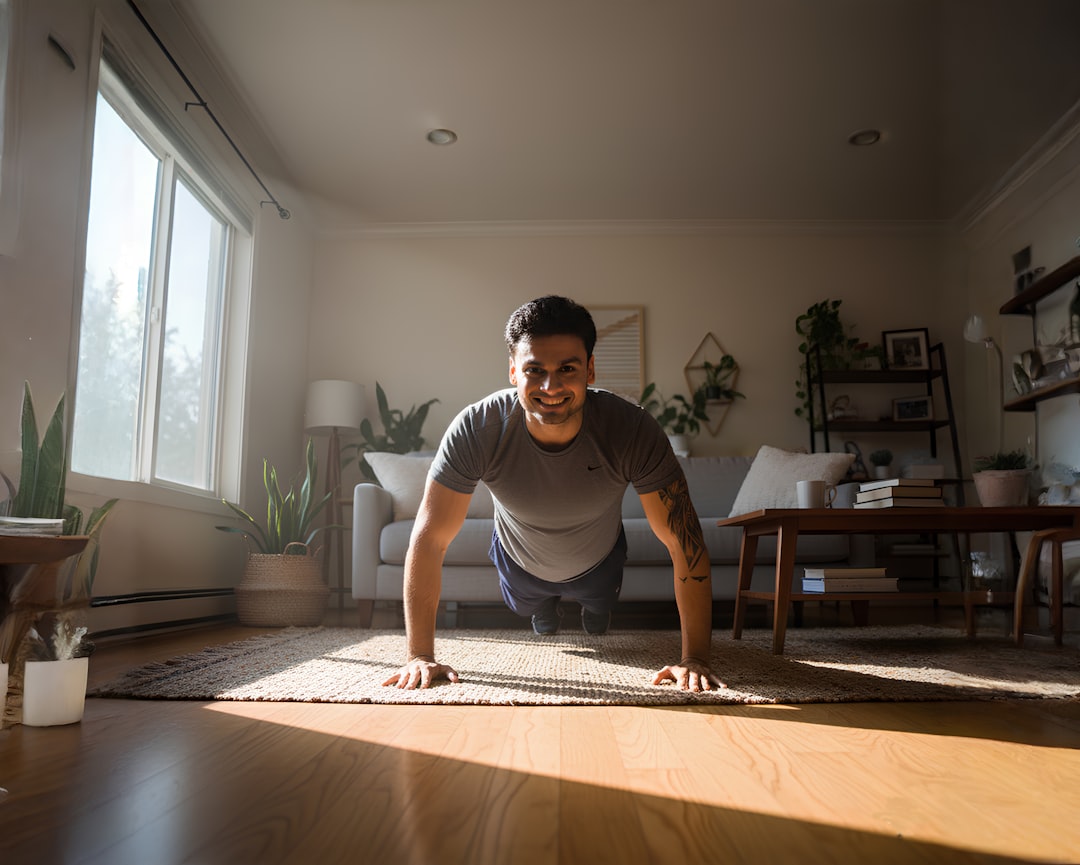
1. Push-Ups (Chest, Shoulders, Triceps, Core)
The classic for a reason. Push-ups build upper body strength and core stability simultaneously.
How to do it:
- Start in a high plank position, hands slightly wider than shoulder-width
- Keep your body in a straight line from head to heels
- Lower your chest toward the ground, elbows at a 45-degree angle
- Push back up to start
Easier: Do them on your knees or against a wall or elevated surface Harder: Add a pause at the bottom, elevate your feet, or try archer push-ups
2. Squats (Quads, Glutes, Hamstrings, Core)
The king of lower body exercises. Squats build leg strength and improve mobility.
How to do it:
- Stand with feet shoulder-width apart
- Push your hips back and bend your knees
- Lower until thighs are parallel to the ground (or as low as comfortable)
- Drive through your heels to stand back up
Easier: Squat to a chair or bench Harder: Try single-leg squats (pistol squats) or add a jump
3. Plank (Core, Shoulders, Back)
The ultimate core strengthener. Planks build stability and endurance throughout your entire torso.
How to do it:
- Start on your forearms and toes, body in a straight line
- Pull your belly button toward your spine
- Don't let your hips sag or pike up
- Hold for 30-60 seconds
Easier: Drop to your knees Harder: Add leg lifts, shoulder taps, or try side planks
4. Lunges (Quads, Glutes, Hamstrings, Balance)
Lunges build single-leg strength and improve balance—essential for everyday movement.
How to do it:
- Step forward with your right leg
- Lower your hips until both knees are bent at 90 degrees
- Your rear knee should hover just above the ground
- Push off your front foot to return to standing
- Alternate legs
Easier: Hold onto a wall for balance or do stationary split squats Harder: Try walking lunges, reverse lunges, or add a jump
5. Dips (Triceps, Chest, Shoulders)
One of the best exercises for building arm strength without weights.
How to do it:
- Sit on a sturdy chair or bench, hands gripping the edge beside your hips
- Slide your butt off the edge, supporting yourself with your arms
- Lower your body by bending your elbows to 90 degrees
- Press back up to start
Easier: Keep your feet closer to your body Harder: Extend your legs straight, elevate your feet, or add weight to your lap
6. Glute Bridges (Glutes, Hamstrings, Lower Back)
This exercise targets your posterior chain—crucial for posture and lower back health.
How to do it:
- Lie on your back with knees bent, feet flat on the floor
- Squeeze your glutes and lift your hips toward the ceiling
- Your body should form a straight line from knees to shoulders
- Lower back down with control
Easier: Reduce the range of motion Harder: Try single-leg glute bridges or add a pause at the top
7. Mountain Climbers (Full Body Cardio, Core)
A dynamic exercise that builds strength while getting your heart rate up.
How to do it:
- Start in a high plank position
- Drive your right knee toward your chest
- Quickly switch legs, bringing left knee forward as right leg extends back
- Continue alternating at a controlled pace
Easier: Slow down the tempo or alternate feet with a pause between reps Harder: Speed up or add a twist to target obliques
8. Superman Hold (Lower Back, Glutes, Shoulders)
Strengthens your entire posterior chain and improves posture.
How to do it:
- Lie face down with arms extended overhead
- Simultaneously lift your arms, chest, and legs off the ground
- Hold for 15-30 seconds
- Lower back down with control
Easier: Lift just your chest or just your legs Harder: Add alternating arm and leg lifts (bird dogs)
Building Your Bodyweight Workout Routine
The Beginner Full-Body Workout
Perform 2-3 times per week:
- Push-ups (knee): 3 sets of 8-10 reps
- Squats: 3 sets of 12-15 reps
- Plank: 3 sets of 20-30 seconds
- Glute bridges: 3 sets of 12-15 reps
The Intermediate Challenge
Perform 3-4 times per week:
- Push-ups (standard): 3 sets of 12-15 reps
- Squats: 3 sets of 15-20 reps
- Lunges: 3 sets of 10 per leg
- Plank: 3 sets of 45 seconds
- Dips: 3 sets of 10-12 reps
- Mountain climbers: 3 sets of 20 total reps
The Advanced Circuit
Perform 4-5 times per week:
- All 8 exercises in a circuit format
- 30-45 seconds per exercise
- 15 seconds rest between exercises
- 2-3 rounds total
- 2-3 minutes rest between rounds
Common Mistakes to Avoid
Rushing through reps: Slow, controlled movements build more strength and reduce injury risk. "I tell my clients: If you can't do it slowly with perfect form, you're not ready for that variation," Williams says.
Holding your breath: Breathe naturally throughout each exercise. Generally, exhale during the hard part (pushing up in a push-up) and inhale during the easier part (lowering down).
Ignoring pain: Muscle fatigue is normal; sharp or joint pain is not. "Listen to your body," Williams emphasizes. "Modify or stop if something doesn't feel right."
Skipping progressions: Don't jump straight to advanced variations. Master the basics first, then gradually increase difficulty.
How to Progress Over Time
The beauty of bodyweight training is the built-in progression system:
Weeks 1-4: Master proper form, build endurance Weeks 5-8: Increase reps, add sets, decrease rest time Weeks 9-12: Try harder variations, increase tempo challenge Beyond: Combine variations, add isometric holds, explore calisthenics skills
"Progress isn't just about doing harder exercises," Williams notes. "Sometimes it's about doing the same exercise with better form, more control, or longer time under tension."
Your Next Steps
Here's your action plan for this week:
-
Test your baselines: How many push-ups can you do with good form? How long can you hold a plank? This gives you a starting point.
-
Choose your routine: Beginner, intermediate, or advanced—pick based on where you are now, not where you want to be.
-
Schedule your sessions: Block out 20-30 minutes, 2-3 times this week. Put it in your calendar like any other important appointment.
-
Track your progress: Keep a simple log of reps, sets, and how you felt. This data is gold.
No equipment, no excuses, no problem. Your body is ready to get stronger—you just need to start.